High-performance computing & infrastructure engineer

From the GPU kernel
to the cluster in production.

I build high-performance computing tools, and I run the infrastructure that ships them: GPU energy measurement for Kokkos at Oak Ridge, HPC for nuclear simulation at EDF, and a five-node cluster running about 20 services in production, operated end to end from Docker to CI/CD.

ORNL · EDF · 5-node production cluster

Selected work
/01 Selected work

Things I built, and what they cost

Case studies below, the flagship first.

Flagship

Measuring where the energy goes on the GPU

Energy-measurement tooling for Kokkos, the US Department of Energy's performance-portability framework. Connectors merged into Kokkos Tools, plus an analysis dashboard.

The problem

Kokkos lets one C++ source run across NVIDIA, AMD, and Intel GPUs, which is exactly why energy is hard to reason about: the same kernel draws different power on every backend, and application teams had no portable way to see it. On DOE machines, where power is now a first-class constraint, that blind spot matters.

What I built

A set of Kokkos Tools connectors that sample power while kernels run and attribute the integrated energy to the Kokkos regions that caused it: an NVML backend for NVIDIA GPUs, a Variorum backend for node-level power, a background daemon sampling on a fixed interval, and CSV export. On top, a Python dashboard turns that output into per-kernel energy analysis. It hooks the Kokkos profiling interface, so application code is untouched.

Where it stands

The periodic-sampling daemon is merged into kokkos-tools, written up in an ORNL report, and presented as a poster, 'Understanding GPU Energy Dynamics in HPC Applications', at the 2025 Smoky Mountains Conference. The NVML and Variorum connectors are in review, with ROCm SMI sketched for AMD.
HPC for nuclear simulation

A three-year apprenticeship building C++ performance tooling for COCAGNE, EDF's reactor-core simulation platform: a scientific codebase of more than 500,000 lines.

The context

EDF's ASICS group develops the scientific computing that nuclear simulation depends on. Alongside my engineering degree, I spent three years on COCAGNE, a reactor-core simulation platform of more than 500,000 lines of C++, on the performance and tooling that keep a codebase that size measurable.

What I built

Two internal C++ performance-analysis tools: a memory-profiling library that intercepts allocation through LD_PRELOAD, and a hierarchical CPU-timing tool with Python bindings via PyBind11. I took part in refactoring the neutronic solvers toward a Ports and Components model, and built the Debian packaging pipeline on GitLab CI/CD and Jenkins.

A three-year industrial apprenticeship. The work above is cleared for public mention; the rest stays under confidentiality.

Running my own production

A five-node Proxmox cluster, sentinel, hosting around 20 publicly reachable services on hardware I run and automate myself.

The setup

Five Proxmox nodes (cerberus, echelon, mikoshi, cynosure, ultron) behind a VyOS edge over a WireGuard uplink. One Traefik terminates Let's Encrypt TLS for around 20 services under kerboul.me: a Gitea forge, a Coolify PaaS, Nextcloud, a media stack, and the apps I deploy, including this site. The cluster's runbooks and automation are themselves a repo.

Why it's here

I am the only person on call: uptime, backups, certificate renewal, monitoring, and the unglamorous failure modes you only meet running your own infrastructure on a Sunday night. The site you're reading ships to it through a CI/CD pipeline that builds a versioned image, scans it for vulnerabilities, and rolls back automatically on a failed health check.

sentinel, live

querying the cluster…

Live from the cluster's own Proxmox API. The infrastructure on this page is online as you read it.

Delivering an event for 120+ players

An annual operation I've run since 2020 in DCS World, a combat flight simulator: planning, real-time coordination, and logistics for 120+ simultaneous players, 150+ registered this edition.

The other kind of systems

DCS World is a combat flight simulator. The Opération Endgame is the annual event I have designed and run in it since 2020: four hours, a fixed takeoff time, 120+ players airborne at once (150+ registered this edition), split into pilot, ground-controller (JTAC), air-control (AWACS/GCI), and logistics cells. Briefings, frequencies, the mission order, and the fallback plan for a server drop are all prepared in advance. On the day, H-hour does not move.

Mapping the French DCS scene

A live directory of French-speaking DCS World communities I built and host, with stats and infographics on the scene.

What it is

Commus indexes the French-speaking DCS World communities, 57 of them, with filtering, comparison, and a set of infographics: a periodic table of modules, a timeline, an activity pulse. A Vue front end I host, kept current by a small updater service. The index started from a concrete need: knowing who to invite to the Opération Endgame.

/02 Expertise

By domain

Five areas, and where each one actually got used.

Writing for the GPU and reasoning about what it costs, in time and now in energy.

  • CUDA
  • OpenMP & MPI
  • Kokkos & performance portability
  • GPU power & energy telemetry

Performance engineering & tooling

Used in EDF · ASICS

Internal C++ tools that keep a large scientific codebase measurable, and the build pipeline around them.

  • Memory profiling (LD_PRELOAD)
  • CPU timing & instrumentation (PyBind11)
  • C++ build systems (CMake)
  • Debian packaging & CI (GitLab CI/CD, Jenkins)

Infrastructure & DevOps

Used in sentinel cluster

The full path from a commit to a request served, and the reliability work behind it, on hardware I'm accountable for.

  • Proxmox VE clustering
  • Kubernetes / K3s
  • Traefik, TLS & reverse proxy
  • Docker & Gitea CI/CD

Full-stack & real-time

Used in commus

Interfaces and live systems, including the one rendering this page.

  • Vue 3 / Nuxt 3
  • TypeScript
  • Self-hosting & deployment
  • Astro

The defensive basics a self-hosted, internet-facing cluster forces you to get right.

  • TLS & PKI (Let's Encrypt, ACME)
  • Network segmentation (VLAN, WireGuard)
  • Edge & reverse-proxy hardening
  • Secrets & access hygiene
/03 Writing

Notes from the bench

Write-ups on HPC, GPU computing, infrastructure, and the projects behind them.
Read all posts
/04 Trajectory

Polytech → EDF → Oak Ridge

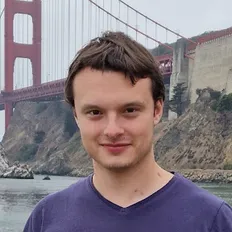
Ethan Puyaubreau, High-performance computing & infrastructure engineer
Ethan Puyaubreau a.k.a. Kerboul · DaKerboul Paris, France

It all comes from one place: a cluster I built at home, Sentinel. Ethan measures GPU energy and runs the production on it; Kerboul hosts his films and his community on it. Both ride the same hardware, from on-call to certificates. This site and its live readout come off it.

I work two tracks at once. One is high-performance computing: the GPU and performance work that makes scientific code fast. The other is the infrastructure that puts software into production and keeps it there: containers, pipelines, reverse proxies, and the cluster underneath. The two meet quickly: the code I tune ends up on machines someone has to operate, and I have worked both ends.

At Oak Ridge National Laboratory I built GPU energy-measurement tooling for Kokkos, the portability layer that runs US Department of Energy codes on its supercomputers. The periodic-sampling daemon is merged upstream into Kokkos Tools, and the work became a poster at the 2025 Smoky Mountains Conference.

Alongside that I spent three years as an apprentice on HPC for nuclear simulation at EDF, and I run a five-node production cluster of my own: around twenty services behind Traefik and TLS, deployed with Docker and CI/CD, with image scanning and automatic rollback. When something breaks at three in the morning, there is nobody else to call.

I finish my engineering degree at Polytech Paris-Saclay in September 2026 and am looking for a permanent role from January 2027. HPC labs are a natural fit, the Bay Area (Berkeley Lab, LLNL) and Paris with the CEA among them, but I am just as interested in infrastructure, DevOps, SRE, and platform engineering, on-prem or in the cloud; ideally a role that touches both. Off the clock I have flown Kerbal Space Program since 2011, and I care about hosting my own data: this site and the cluster behind it run on hardware that lives in my flat. My address is at the bottom of the page.

/05 Contact

The short version

Open to HPC, infrastructure & DevOps roles from January 2027

For HPC labs or infrastructure and platform teams, in the Bay Area or Paris.

The fastest way to reach me

Get in touch